How Much Does Gutter Repair Cost in 2026?
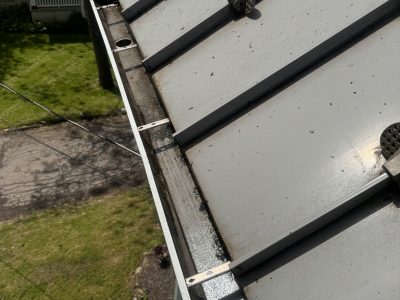

Gutter repair costs in 2026 usually land somewhere between $180 and $850 for a typical home, with many homeowners paying in the middle of that range for common fixes like resealing joints, reattaching loose sections, replacing hangers, or correcting a minor slope problem. Once damage spreads, costs rise quickly. A partial section replacement can push the bill past $1,000, and repairs tied to fascia rot, water intrusion, or difficult roof access can go beyond that.
That broad range is not a dodge. It reflects how gutters actually fail in the field. A ten-foot section that pulled away from a one-story ranch is a different job from repairing second-story copper gutters on a steep roof with mature landscaping below. Material, height, labor rates, local weather, and whether water damage has already started all change the final number.
Homeowners often ask a simple question, “What does gutter repair cost?” The better question is, “What kind of gutter problem do I have, and how far has it progressed?” That is what determines whether you are paying for a quick service call or a half-day exterior repair with carpentry mixed in.
The real 2026 price range
For most standard aluminum gutter systems, small repairs tend to fall into predictable bands. A contractor may charge a minimum service call even if the fix itself is simple, so the smallest jobs are not always the cheapest on a cost-per-minute basis.
Here is a practical look at what many homeowners can expect in 2026:
| Repair type | Typical 2026 cost range | |---|---:| | Resealing leaking joints or end caps | $120 to $300 | | Reattaching loose gutters or downspouts | $150 to $350 | | Replacing hangers, brackets, or fasteners | $150 to $400 | | Correcting pitch or slope issues | $250 to $600 | | Repairing a damaged downspout | $100 to $350 | | Replacing a small gutter section | $250 to $700 | | Repairing fascia or soffit tied to gutter damage | $300 to $1,200+ | | Two-story or hard-access repairs | Add 15% to 40% in many markets |
Those numbers assume normal residential work, not specialty materials or severe storm restoration. They also assume you are hiring a professional rather than climbing a ladder yourself.
The homes that stay near the low end usually have one localized issue: a leaky seam, a detached elbow, a few failed spikes, or a short run that needs rehanging. The bills climb when the repair becomes diagnostic. If a crew has to trace overflow back to improper slope, hidden clogs, rotten fascia, and splashback around the foundation, it stops being a quick patch and starts becoming a system correction.
What drives Gutter Repair costs up or down
The same repair can cost very different amounts from one house to the next. That surprises people until they watch how the work is actually done. Access and condition matter almost as much as the damaged part itself.
- Gutter material, aluminum is usually the most economical to repair, while steel, zinc, and copper cost more in both parts and labor
- Home height and roof pitch, second-story work, steep roofs, and tight ladder placement add time and safety requirements
- Extent of damage, one separated joint is cheap, but multiple failing sections often point to a larger installation or drainage problem
- Hidden wood damage, fascia and soffit rot can turn a gutter repair into a mixed gutter and carpentry job
- Regional labor rates, urban and coastal markets often run noticeably higher than small-town service areas
Material deserves extra attention because it changes both the repair method and the economics of the decision. Aluminum is common, light, and fairly forgiving. If a branch dents it or a seam opens, repair is often straightforward. Copper is another story. It lasts a long time and looks beautiful, but matching aged copper and soldering clean joints takes skill. A “simple” repair on copper can cost more than replacing an entire short aluminum run.
Roofline design also shapes pricing. A one-story rectangle with clean access is friendly to service crews. A house with multiple gables, screened enclosures, dormers, and delicate landscaping is not. On those homes, labor moves slower, setup takes longer, and the chance of needing a second worker goes up.
Common repairs and what they usually cost
Not all gutter problems are equal, and the language homeowners use does not always match the actual repair. “The gutter is leaking” might mean a failed seam, standing water from improper pitch, a cracked outlet, or overflow from a clogged underground drain. That is why estimates can vary before the contractor sees the house.
Leaky seams and end caps
This is one of the most common calls and often one of the least expensive if caught early. Sealants break down over time, especially in climates with freeze-thaw cycles and strong UV exposure. A small leak at a seam or end cap may cost $120 to $300 to clean, prep, and reseal properly.
The key word is properly. Smearing caulk over dirt and oxidation is not a repair that lasts. Good crews clean the joint, remove failed sealant, dry the area, and use a product meant for gutters and outdoor expansion. If multiple seams are failing at once, the total rises, but the per-seam cost usually drops if done on the same visit.
Loose or sagging gutters
Sagging usually points to failed hangers, spikes pulling loose, or wood behind the gutter losing strength. If the gutter itself is still in good shape, rehanging and securing a run may cost $150 to $400. The lower end applies when the gutter only needs new fasteners and a few bracket replacements. The upper end applies when a longer run has dropped out of line or the fascia needs reinforcement.
This is a repair worth doing quickly. Once a gutter loses pitch, water starts pooling. That adds weight, which worsens the sag, which then accelerates separation and overflow. Left alone, a modest rehang can become a replacement job.
Downspout repairs
Downspouts take abuse from ladders, lawn equipment, wind, and ice. They get crushed, disconnected, or clogged at elbows and outlets. Many downspout repairs fall between $100 and $350. If the problem is isolated to one elbow or a separated joint, the cost can be modest. If the downspout ties into underground drainage and the blockage is below grade, the bill rises because diagnostics and flushing take longer.
A disconnected downspout is easy to underestimate. I have seen homes with perfectly good gutters spilling water right beside the foundation because the lower downspout extension had come loose. The repair was inexpensive. The grading correction and basement moisture mitigation that followed were not.
Pitch correction
Improper slope is a subtle but expensive issue if ignored. Gutters need enough pitch to move water to the outlet, but not so much that they look visibly crooked. Correcting pitch generally runs $250 to $600, depending on the run length and how many hangers need adjustment or replacement.
This problem often shows up as standing water after rain, mosquito breeding, rust in steel systems, or winter ice buildup in colder regions. Some systems were installed poorly from the start. Others drift over time as fasteners loosen or wood framing moves.
Section replacement
When a section is bent, split, rusted through, or beyond reshaping, replacement makes more sense than patching. Replacing a short section may cost $250 to $700 for common aluminum systems. Matching color, profile, and age affects the total. Seamless gutters add another wrinkle because a contractor may need to fabricate material on-site or replace a longer run than the damaged area alone would suggest.
On older systems, section replacement sometimes exposes a larger truth: the repair is possible, but the surrounding gutter has reached the same stage of wear. A reputable contractor should tell you that, even if you still choose the smaller repair for budget reasons.
When repair is smarter than replacement
Most homeowners do not want to hear “replace the whole system” when only one area looks bad. Fair enough. Repair is often the right call, especially when the gutters are relatively new and the damage is localized.
Repair usually makes sense when the metal is sound, the issue is limited to a small area, and the system was installed correctly to begin with. A separated joint, a few loose hangers, or a dent from a fallen branch are all repair-friendly scenarios.
Replacement becomes more sensible when problems repeat across multiple sections, rust or corrosion is widespread, the gutter profile is obsolete and hard to match, or fascia damage is appearing in several places. If you are facing a $700 repair on a very old system with ongoing leaks in other areas, it may be wiser to put that money toward new gutters.
That does not mean every contractor recommending replacement is overselling. Sometimes replacement truly is the cheaper long-term decision. The trick is asking for a plain explanation of what has failed, what can be repaired, and how long that repair is realistically expected to last.
The hidden costs homeowners miss
The line item on the estimate is not always the full financial picture. Gutters are small components with outsized consequences. They manage roof runoff, protect siding, reduce soil erosion, and help keep water away from the foundation. When they fail, the damage spreads sideways.
A minor leak behind the gutter can quietly rot fascia boards for months. Overflow near entryways can stain masonry or rot trim. Repeated dumping near the foundation can contribute to settlement issues or basement seepage, especially in clay-heavy soils. None of that shows up in the first estimate for Gutter Repair, but it is often why waiting costs more.
There is also the issue of bundled service. Some companies charge a trip minimum, which means the invoice may feel high if all they did was tighten hangers and reseal one corner. On the other hand, if you combine cleaning, minor repairs, and a downspout adjustment on the same visit, the total value can be much better.
How seasonal timing affects price
Gutter work is highly seasonal in many regions, and that influences both pricing and scheduling. In late fall, when leaves are dropping and every overflow becomes visible, companies get busy. After major storms, demand jumps. When schedules back up, homeowners have fewer choices and less negotiating room.
Spring is another common repair season because winter exposes weaknesses. Ice, snow loads, and freeze-thaw expansion can loosen brackets and open seams. If you call during a spring rush, you may pay more than you would during a slower stretch.
If your issue is not urgent, off-peak scheduling can help. Some contractors are more flexible in mid-summer or after the leaf season ends. You may not get a dramatic discount, but you often get faster turnaround and more attention to detail.
What a contractor looks for during an estimate
A good estimate is not just a price, it is a diagnosis. The contractor should look at the gutters, the downspouts, the fascia, and where water is landing at ground level. They should also check for signs that the visible problem is only a symptom.
Some warning signs usually mean you should move quickly:
- water marks behind the gutter
- visible sagging or standing water in the trough
- screws or spikes backing out
- overflow near the foundation after moderate rain
- peeling paint or soft wood along the fascia
Those are not cosmetic issues. They are clues about water movement and structural attachment. If the estimate is based only on a quick glance from the driveway, you are not getting much diagnostic value.
I also like to see specificity in the written scope. “Repair gutter” tells you almost nothing. “Rehang 18 feet of front gutter, replace six hidden hangers, reseal left end cap, reconnect downspout elbow, test flow” tells you exactly what you are buying.
DIY versus hiring a professional
Homeowners can handle some minor gutter issues, particularly on one-story homes with safe ladder access. Cleaning debris, tightening a loose strap on a downspout, or resealing a clearly visible end cap are common DIY tasks. That said, many injuries happen during routine ladder work, and gutters often look simpler to repair than they are.
The problem is not usually the sealant or the screw. It is the reason the seal failed or the screw loosened. If a gutter keeps separating, there may be movement in the fascia or a pitch problem across the whole run. If water is spilling over one section, the clog may be downstream. A professional brings both safety equipment and pattern recognition.
There is also the quality issue. A temporary DIY patch that lasts six weeks through dry weather can make a later estimate harder because it hides the original failure. Contractors often have to strip off incorrect sealants or undo poorly placed fasteners before the real repair begins.
Material matters more than many people expect
Aluminum dominates the residential market for good reason. It balances cost, corrosion resistance, and ease of installation. Repairing it is usually straightforward unless it is badly creased or torn.
Steel is stronger but more vulnerable to rust if coatings fail. Small rust spots can sometimes be treated, but once corrosion spreads through seams or bottom channels, replacement becomes more common.
Vinyl is inexpensive and easy to work with, but it can turn brittle with age and temperature swings. A single broken connector might be cheap to replace, yet older vinyl systems often have cascading failures because the plastic components age at similar rates.
Copper is in its own category. It is premium material, visually distinctive, and durable, but repairs demand experience. Matching patina is difficult, soldering requires skill, and replacement parts cost more. Homeowners with copper gutters usually pay more for repair, but they are also often preserving a system with long service life and architectural value.
Regional differences in 2026
Pricing is not uniform across the country. In high-cost metro areas, minimum service calls alone can approach what a full small repair costs in a lower-cost region. Coastal areas often see higher prices because of labor costs, corrosion concerns, and stricter exterior standards. Snow-country markets may also price for tougher working conditions and winter-related damage patterns.
Weather shapes the type of repair, too. In dry climates, UV degradation and thermal expansion tend to show up more. In wet climates, mildew, persistent leaks, and hidden wood rot are more common. In northern states, ice loads and freeze-thaw seam failures are routine. Two homes with the same visible symptom may need different fixes because of climate history.
How to keep repair costs from snowballing
The least expensive gutter repair is the one that stays small. Gutters do not need constant attention, but they do reward periodic inspection. After major storms, it is smart to walk the perimeter and look for fresh sagging, drips, or splash marks. During rainy weather, if you can safely observe from the ground, watch where water exits and where it overflows.
Cleaning matters, but so does attachment. Plenty of systems overflow not because they are full of leaves, but because one side has settled and the outlet is no longer the low point. Likewise, adding gutter guards can reduce cleaning frequency, but guards do not fix bad pitch, failing fascia, or undersized downspouts.
If you already know a section is questionable, do not wait until the next heavy rain. Contractors are easier to book before the emergency. The price is usually better, and the repair options are broader before wood and finishes are involved.
What homeowners should ask before approving the work
A short conversation can prevent a lot of frustration. Ask whether the estimate covers only the visible repair or includes https://andrevirt971.terracolumn.com/posts/simple-inspection-tips-before-starting-gutter-repair checking flow through the downspouts. Ask whether fascia damage is suspected. Ask how closely new sections can be matched to the existing system. Ask whether the contractor expects the repair to buy you a few years or many.
The best answers are measured, not dramatic. No one can promise that an old system will behave like new after one repair. On the other hand, a contractor who explains trade-offs clearly is usually worth listening to. If they say, “We can repair this area for $300, but two adjacent runs are aging and may need attention within a year or two,” that is useful information.
Price matters, but so does judgment. The cheapest quote is not always the least expensive outcome.
So, how much should you budget?
For a basic professional Gutter Repair visit in 2026, a practical starting budget is $250 to $500. That covers many common residential issues without hidden carpentry or difficult access. If your home is two stories, the damage is more than cosmetic, or water has been escaping for a while, budgeting $500 to $1,200 is safer.
If you are dealing with premium materials, widespread sagging, or fascia rot, be ready for estimates that move beyond those numbers. At that point, you are not just repairing a channel for rainwater. You are restoring part of the house’s exterior drainage system and preventing a much more expensive chain reaction.
That is why prompt action matters. Gutter problems rarely stay in the gutters. They migrate into wood, paint, soil, siding, and foundations. Catch them early, and the cost is often manageable. Wait through another season of rain, and the same repair can become several repairs stacked on top of each other.
Just Gutters LLC
262 Main St
Hackettstown, NJ 07840, United States
Phone: +1 201-331-9454
FAQ About Gutter Repair
Is it cheaper to repair or replace gutters?
Repair can cost less when damage is limited and the remaining system is sound. Replacement may offer better value when leaks, corrosion, or repeated failures affect several sections. An inspection and written estimate can help compare the options.
Can damaged gutters be repaired?
Many localized problems, including leaking joints, loose brackets, sagging sections, and damaged downspout connections, can be repaired. The best approach depends on the material, extent of damage, and condition of the mounting surface.
Can I repair gutters myself?
Simple ground-level checks may help identify a problem, but roof-edge work carries fall risks and may require specialized tools. Professional assessment is advisable for high gutters, loose sections, hidden wood damage, or uncertain drainage problems.